
Mill Finish Aluminum vs. Clear Anodized Aluminum
Mill Finish Aluminum and Clear Anodized Aluminum are two common forms of aluminum products that often appear similar in appearance at first glance. However, beneath these comparable exteriors, there are significant differences in performance between the two. It is not accurate to simply declare one superior to the other, as each offers distinct advantages that make it more suitable for certain applications. This article will provide a detailed analysis of the key differences in properties between Mill Finish and Clear Anodized Aluminum, as well as guidance on their most appropriate uses.
Surface Appearance Differences
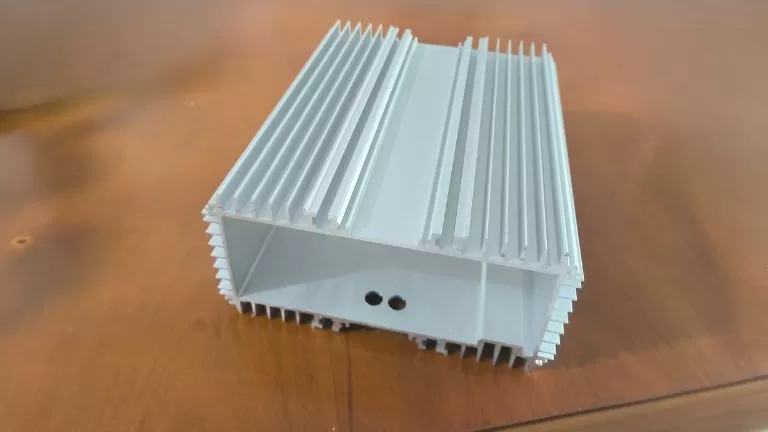
Both Mill Finish Aluminum and Clear Anodized Aluminum share a silver-white coloration, but their surface qualities are distinct. Mill Finish Aluminum is typically brighter and more reflective, displaying a smooth metallic luster. In contrast, Clear Anodized Aluminum has a slightly more subdued, matte finish with a subtle, finely textured feel that is noticeable when touched or lightly scratched with a fingernail.

How to Distinguish Between the Two
In practical terms, there are simple methods to distinguish between the two surfaces. Dragging a metal key across the surface will leave visible scratches on Mill Finish Aluminum, while Clear Anodized Aluminum remains unmarked, thanks to its hard, anodized layer. Similarly, pressing a finger against Mill Finish Aluminum will leave noticeable fingerprints, whereas the surface of Clear Anodized Aluminum resists fingerprint marks and remains clean.
Benefits of Clear Anodizing
Converting mill finish aluminum to a clear anodized finish requires processing on an anodizing production line, which typically increases the material cost by approximately 5-10%. However, this additional investment provides a range of significant advantages.
Aesthetic Appeal
Mill finish aluminum will naturally oxidize over time, resulting in a progressively darker appearance. This natural oxidation tends to occur unevenly, leading to visible patches and inconsistent coloration across the surface.
In contrast, clear anodized aluminum undergoes a controlled process that produces a uniform oxide layer, typically 10–15 microns thick, compared to the thinner and less consistent 2–10 microns formed by natural oxidation. As a result, clear anodized aluminum maintains a consistent and attractive appearance that remains unchanged for at least ten years, ensuring long-term visual appeal.
Hardness and Wear Resistance
The anodized layer produced by clear anodizing is composed of aluminum oxide (Al₂O₃), which possesses a ceramic molecular structure and extremely high hardness. Typically, the thickness of the clear anodized coating is 10–15 microns, and it can be increased to 25 microns through hot anodizing.
In terms of hardness, mill finish aluminum measures between 20 and 120 HV (Vickers Hardness), while clear anodized aluminum achieves a surface hardness of 300 to 600 HV—approaching the hardness of stainless steel. As previously mentioned, this high level of hardness means that even when scratched with a metal key, the anodized surface remains unmarked.

Paintability and Surface Coating
After anodizing, the aluminum surface develops microscopic pores that significantly enhance its ability to absorb dyes, making it highly suitable for secondary finishes such as electrophoresis or wood grain transfer, both of which require anodizing as a pre-treatment.
For manual painting or coating applications, anodized aluminum provides superior pigment adhesion due to this porous structure. In contrast, mill finish aluminum has poor paint adhesion and generally requires additional pre-treatment before any coating can be effectively applied.
Acid and Alkali Resistance
The oxide layer formed by clear anodizing provides excellent resistance to acidic and alkaline environments, effectively protecting the aluminum substrate in media with a pH range of 4 to 9. This is due to the ceramic-like molecular structure of aluminum oxide (Al₂O₃), which is inherently stable and resistant—comparable to the durability of ceramic vessels against acids and bases.
In contrast, mill finish aluminum is highly susceptible to rapid corrosion when exposed to strong acids (pH < 4) or strong alkalis (pH > 9), making it far less suitable for use in corrosive environments without additional protective treatment.
Human Safety
When in prolonged contact with bodily fluids or acidic environments, untreated aluminum may release aluminum ions (Al³⁺). Excessive intake of aluminum ions has been associated with several health concerns:
- Nervous System: Aluminum ions can cross the blood-brain barrier and have shown a statistical correlation with Alzheimer’s disease, although no direct causal relationship has been established.
- Skeletal System: Aluminum can interfere with calcium metabolism, potentially leading to osteoporosis.
- Kidneys: Individuals with impaired kidney function may have difficulty eliminating aluminum ions, increasing the risk of accumulation and toxicity.
In contrast, clear anodized aluminum is covered by a stable, solid-state oxide layer. This anodized layer acts as a protective barrier, preventing the release of aluminum ions and ensuring that the underlying aluminum does not come into contact with the environment. As a result, clear anodized aluminum is significantly safer for applications involving human contact.

Reasons for Choosing Mill Finished Aluminum
Although clear anodized aluminum offers numerous advantages, there are certain applications where anodized aluminum is not suitable.
Electrical Conductivity
Electrical conductivity relies on the presence of free electrons, as found in metals, or mobile ions. The oxide layer formed on anodized aluminum is a solid molecular structure and acts as an electrical insulator.
As a result, clear anodized aluminum does not conduct electricity. For applications that require electrical conductivity—such as circuit boards or conductive components where uninterrupted electrical flow is essential—mill finished aluminum is used instead, as it retains the free electrons necessary for efficient conduction.

Thermal Conductivity
Aluminum is well known for its excellent thermal conductivity, with a thermal conductivity value of approximately 237 W/(m·K), making it a popular choice for use in heat sinks and other thermal management components. However, after anodizing, the resulting oxide layer has a much lower thermal conductivity, around 30 W/(m·K).
This significant reduction in heat transfer efficiency means that, for heat sinks and similar components where optimal thermal performance is essential and aesthetic considerations are minimal, mill finished aluminum is preferred.
Ductility and Workability
If aluminum is to be stretched or machined, the anodized oxide layer will be damaged. Therefore, anodized aluminum should not be selected for components that require further processing; mill finished aluminum is recommended.
Cost Considerations
Anodizing increases both processing complexity and cost. The thicker the anodized layer, the higher the cost. Standard clear anodized aluminum typically has a layer thickness of 10–15 μm, while thermal anodizing can reach up to 25 μm, resulting in a cost increase of approximately 5–10%. For applications requiring an even thicker protective layer, hard anodizing is used, which is significantly more expensive and causes the aluminum surface to develop colors ranging from champagne and brown to gray or black as the thickness increases.
Where anodizing is not necessary, using mill finished aluminum offers cost savings and is more environmentally friendly. The anodizing process is energy-intensive and requires the use of acids, which pose potential environmental hazards. Opting for mill finished aluminum minimizes both financial and environmental impacts.
Conclusion
Clear anodized aluminum should be selected when corrosion resistance, wear resistance, electrical insulation, or long-term outdoor performance is required. Typical applications include building facades, medical devices, and premium electronic products.
Mill finished aluminum is the preferred choice for short-term use, cost-sensitive projects, or applications where electrical conductivity or enhanced heat dissipation is necessary. It is commonly used for temporary structural assemblies, heat sink base materials, and conductive connectors.