
Is Aluminium Waterproof?
On the topic of “Is Aluminium Waterproof?”, it is important to first define what waterproof means, examine what happens when aluminium comes into contact with water, and then analyze the waterproof performance of specific aluminium products.
What Is Aluminium?
Aluminium is a lightweight, corrosion-resistant metal widely used in construction, packaging, transportation, and electronics.
When exposed to water, aluminium quickly forms a dense aluminium oxide (Al₂O₃) layer on its surface, providing effective corrosion protection. However, this oxide film can be damaged in extreme environments such as strong acids, strong bases, or extended immersion, reducing the metal’s resistance to corrosion.
What Does Waterproof Mean?
Waterproof refers to a material or structure’s ability to effectively prevent the penetration of liquid water, thereby avoiding internal damage caused by moisture. The standard for waterproof performance is usually measured by waterproof ratings, such as the IP rating system (Ingress Protection) or ASTM standards:
- IPX0: No protection against water.
- IPX1–IPX4: Protection against dripping or splashing water (e.g., aluminium doors and windows).
- IPX5–IPX7: Protection against water jets or short-term immersion (e.g., aluminium roofing).
- IPX8: Fully waterproof, suitable for continuous immersion (e.g., aluminium marine components).

Different Aluminium Products Performance
Aluminium inherently forms a natural oxide layer (Al₂O₃), which provides resistance to corrosion in typical environments. However, the waterproof capability of specific aluminium products depends on their structural design, surface treatment, and installation methods.
Aluminium Sheets & Aluminium Foil Waterproof
Mill finish aluminium sheets and foils, when exposed to water, naturally develop an aluminium oxide (Al₂O₃) protective layer. This oxide layer, which may appear as a whitish stain known as “white rust,” is not aesthetically pleasing but does not compromise the metal’s integrity or allow water penetration. In fact, the oxide film ensures that water does not pass through the aluminium.
Some aluminium sheets undergo anodizing treatment before delivery, resulting in a uniform and visually appealing oxide layer. This anodized layer remains unchanged upon contact with water, except in the presence of strong acids or bases.
While both aluminium sheets and foils are inherently impermeable to water, the waterproofness of assembled aluminium sheet structures largely depends on the sealing performance at the joints, where waterproofing is ensured by appropriate sealing materials.

Aluminium Roof Waterproof
An aluminium roof can be manufactured by bending aluminium sheets or by extrusion under pressure. These roofs typically undergo surface treatments to achieve decorative finishes and improved performance. For roofs made from aluminium sheets, a baked paint coating is commonly applied. In the case of extruded aluminium roofing, powder coating is used. Both methods enhance the waterproof properties of the finished product.
In installation, the overlapping of aluminium roof segments is carefully designed to accommodate the direction of rainwater flow. As a result, even during heavy rainfall, properly installed aluminium roofing systems are highly effective at preventing water leakage.
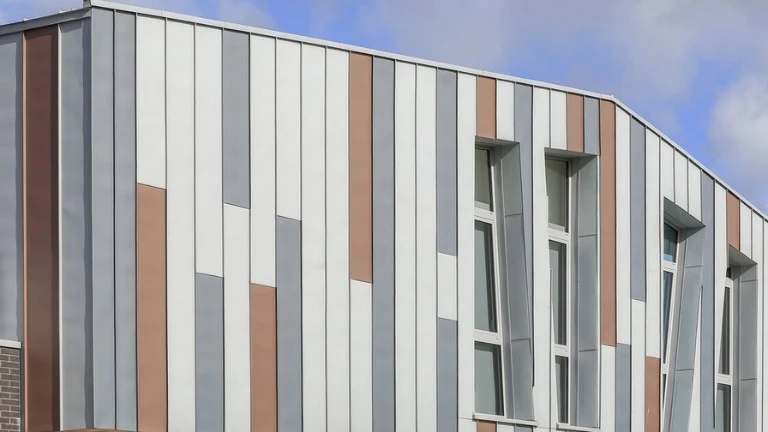
Aluminium Cladding Panels Waterproof
Aluminium wall panels are suitable for both interior and exterior architectural decoration. When used indoors, concerns such as humidity, condensation, or splashing water are minimal because aluminium is naturally corrosion-resistant. Additionally, aluminium wall panels feature a decorative surface layer that also serves as a waterproof barrier.
For exterior applications, aluminium’s resistance to corrosion means water cannot penetrate the material itself. Joints between panels are typically protected through overlapping installation (achieving IPX4 rating for splash resistance) and the use of sealing materials (achieving IPX5 rating for water jets), ensuring effective waterproofing. Furthermore, the underlying building envelope usually incorporates multiple levels of waterproofing. Together, these measures ensure that aluminium wall panels can reliably withstand exposure to rain and other environmental factors.
Aluminium Doors and Windows Waterproof
Aluminium doors and windows are constructed using extruded aluminium profiles, which are further treated with surface coatings to enhance corrosion resistance and impermeability. While aluminium frames themselves are not penetrable by water, the assembly consists of multiple profiles, resulting in unavoidable gaps.
Standard aluminium window frames achieve IPX4 waterproof rating by utilizing sealing strips and integrated drainage channels to direct water away from critical areas. “Thermal break” aluminium profiles feature multi-chamber structures and triple seals, in addition to drainage channels, enabling them to meet IPX5 waterproof standards.
The waterproof performance of aluminium doors and windows is also significantly influenced by the opening mechanism. Casement (hinged) windows and doors generally provide much better waterproofing compared to sliding systems, as casement types offer tighter seals and more effective water diversion.

Marine Aluminium Waterproof
For marine applications, aluminium components are frequently submerged in water, including seawater. In such environments, 5xxx series aluminium alloys are commonly used. These alloys contain magnesium, typically ranging from 2.2% to 6.2%—for example, 5052 alloy contains about 2.5% magnesium, while 5083 contains approximately 4.5%.
When immersed, these alloys form a dual protective surface layer consisting of aluminium oxide (Al₂O₃) and magnesium oxide (MgO). This combination delivers greater durability and corrosion resistance than the protective layers formed by other aluminium alloys. Additionally, the presence of magnesium facilitates a sacrificial anode effect: since magnesium has a lower electrode potential than aluminium, it preferentially dissolves during electrochemical corrosion, thereby protecting the aluminium base material.
Marine aluminium manufacturers typically use the 5083 alloy, which can achieve up to an IPX8 protection rating, denoting resistance to continuous immersion under pressure and ensuring excellent waterproof performance in harsh marine conditions.

Conclusion
Aluminium is inherently a corrosion-resistant material that is naturally impermeable to water. The waterproof performance of aluminium products, therefore, is not determined by the metal itself but by how seams and joints are managed. Effective waterproofing relies on the meticulous sealing of these joints, either through the use of sealing materials or by optimizing structural design to direct water flow away from vulnerable areas. By combining appropriate sealing techniques with thoughtful engineering, aluminium products can provide reliable and long-lasting protection against water ingress in a wide range of applications.