Aluminum Melting Point: Key Facts for Industry and Everyday Life
All substances can be classified as either crystalline or amorphous in structure. Crystalline materials, such as metals and many minerals, are characterized by a well-ordered atomic arrangement, which gives rise to a clearly defined melting point—the specific temperature at which the solid transforms into a liquid. In contrast, amorphous materials, like glass or many plastics, lack this ordered structure and consequently do not possess a precise melting point, but rather soften gradually over a temperature range.
Aluminum is a classic example of a crystalline material. Its distinct melting point not only defines its behavior during heating, but also plays a crucial role in its processing, application, and performance in both everyday life and industrial contexts. In this article, we will explore the key facts about aluminum’s melting point and the melting process, highlighting why this property is fundamental to a wide range of practical and technological uses.

Aluminum Melting Point
Pure aluminum has a melting point of 660.3°C (1,220.5°F). However, most aluminum used in everyday life and industry is in the form of alloys, as pure aluminum is relatively soft and requires alloying to improve its properties. The melting point of aluminum alloys is not a single value, but rather a range, due to the presence of multiple alloying elements such as silicon (Si), magnesium (Mg), and copper (Cu). Below are the melting ranges for some common aluminum grades:
| Grade | Main Components | Melting Range (°C) |
|---|---|---|
| 1050 | 99.5% Al | 655–660 |
| 1060 | 99.6% Al | 655–660 |
| 2024 | Cu 4.4%, Mg 1.5% | 500–635 |
| 3003 | Mn 1.2% | 640–655 |
| 4043 | Si 5% | 577–630 |
| 5052 | Mg 2.5% | 605–650 |
| 5083 | Mg 4.5%, Mn 0.7% | 570–640 |
| 6061 | Mg 1.0%, Si 0.6% | 580–650 |
| 6063 | Mg 0.7%, Si 0.4% | 615–655 |
| 7075 | Zn 5.6%, Cu 1.6% | 475–635 |
| A356 | Si 7%, Mg 0.3% | 570–615 |
| ZL101 | Si 6.5%, Mg 0.3% | 570–615 |
| ZL104 | Si 8%, Mg 0.3% | 565–610 |
Why Is the Melting Point a Range?
The melting point of aluminum alloys is given as a range because they are mixtures of several elements, and each phase within the alloy melts at a different temperature.
Solidus (Lower Limit): The temperature at which the lowest-melting component in the alloy begins to melt. For example, in 7075 alloy, zinc-rich regions may start softening at 475°C.
Liquidus (Upper Limit): The temperature at which all components have completely melted into a uniform liquid. In the case of 7075, the aluminum matrix requires heating up to 635°C for full melting.

Aluminum Oxide Al₂O₃ Melting Point
During the melting process of aluminum, aluminum oxide (Al₂O₃) is often formed on the metal’s surface. Aluminum oxide has a very high melting point, approximately 2,072°C (3,762°F), which is dramatically higher than that of pure aluminum.
The presence of this refractory oxide can significantly affect the melting and casting of aluminum. Its high melting point means that the oxide layer remains solid during typical aluminum processing temperatures, presenting both challenges and protective benefits. The specific impact of aluminum oxide on the aluminum melting process will be discussed in detail later in this article.
Aluminum’s Melting Point in Industry
Aluminum is the third most abundant element in the Earth’s crust and the second most widely used metal in industry after iron. Its relatively low melting point is a key factor in many industrial processes, affecting casting, extrusion, welding, recycling, and the development of various alloys.
Oxide Film: A Double-Edged Sword in Industrial Processing
Molten aluminum rapidly forms a dense aluminum oxide (Al₂O₃) surface layer (melting point: 2,054°C). While this film prevents further oxidation and hydrogen absorption, it disrupts industrial workflows:
Casting Defects: The oxide film fragments can entrap in melt flow, causing inclusions in die-cast parts (e.g., automotive engine blocks).
Welding Challenges: Oxide residues on filler wires lead to poor fusion in MIG/TIG welding.
High Hydrogen Solubility: Porosity Management in Production
Molten aluminum absorbs hydrogen 10× faster than solid aluminum, primarily from moisture in furnace atmospheres or charge materials.
Impact: Gas pores (≥0.1 mm) reduce fatigue strength in aerospace castings (e.g., A356-T6 wheels).

Fluidity Advantage: Enabling Complex Castings
Aluminum’s low viscosity (≈1.2 mPa·s at 700°C vs. 5.5 for iron) allows:
High-Pressure Die Casting (HPDC): Fills molds at 40–100 m/s, producing 1–2 mm-thick parts (e.g., Tesla battery housings).
Sand Casting: Achieves 4–6 mm minimum wall thickness (vs. 8–10 mm for steel).
Alloying Element Behavior: Industrial Metallurgy
| Element | Solubility in Al | Industrial Handling | Example Application |
|---|---|---|---|
| Si | High (12.6 wt%) | Eutectic modifiers (Sr/Na) refine Si needles | Engine blocks (A319) |
| Fe | Low (0.04%) | Mn added to convert Fe to Al-(Fe,Mn) phases | Beverage can stock (3004 alloy) |
| Ti | Low (0.15%) | Grain refiners (Al-Ti-B rods) added at launder | Extrusion billets (6xxx series) |
Key Practice: Charge materials are pre-screened for Fe < 0.2% in aerospace alloys to avoid brittle β-AlFeSi.

Reactivity: Furnace and Tooling Challenges
Molten aluminum reacts aggressively with:
Refractories: Silica-based linings degrade via 4Al + 3SiO₂ → 2Al₂O₃ + 3Si; Alumina or boron nitride coatings extend furnace life.
Tool Steel: H13 dies experience aluminizing (Fe-Al intermetallics); nitrided surfaces resist erosion for 80,000–100,000 shots.
Solidification Shrinkage: Defect Control
Shrinkage Volume: 6.6% for pure Al → 5–7% in alloys (e.g., 356: 5.1%).
Industrial Compensation:
- High-Pressure Casting: Squeeze pins apply 50–100 MPa during solidification.
- Riser Design: Top risers in sand casting are 2.5× the casting volume (e.g., for pump housings).
Overheating Risks in Heat Treatment
Low-melting alloys (e.g., 7075: solidus at 475°C) are prone to:
Burnout: Localized melting at grain boundaries if heated >10°C below solidus (e.g., during solution treatment at 465–480°C).
Process Control:
- Multi-Stage Heating: Ramp at ≤5°C/min to 400°C, then to target temperature.
- Quench Delay: Must be <10 sec after exiting furnace to avoid PFZ formation.

Melting Point Considerations for Everyday Aluminum Products
In daily life, aluminum is widely used in a variety of everyday products due to its light weight, excellent thermal conductivity, corrosion resistance, and ease of fabrication; however, its melting point also plays a significant role in determining the safety and performance of these items.
Aluminum Foil
Aluminum foil is widely used for cooking and food storage. When heated in a microwave oven, aluminum foil does not melt because the temperatures reached are far below its melting point (660.3°C/1,220.5°F). However, microwave energy can cause arcing or sparks if the foil is crumpled or comes into contact with the oven walls, posing a fire risk.
During barbecue grilling, aluminum foil is valued for its excellent heat dissipation, which helps distribute heat evenly over food. Nonetheless, if empty foil is placed directly on a flame or grill, especially where it contacts other metals, localized melting may occur.
Aluminum Cookware
Aluminum pots and pans are popular for their light weight and rapid heat transfer. However, if an aluminum pot is left on a stove and heated without any contents (“dry burning”), it can reach temperatures high enough to soften or even melt the metal, potentially causing structural failure.

Aluminum Ladders
While aluminum ladders are lightweight and corrosion-resistant, they are susceptible to softening in the event of a fire. Unlike steel ladders, aluminum ladders can lose their strength and deform at much lower temperatures, making them unsuitable for use as emergency escape routes during fires.
Aluminum Doors and Windows
Aluminum is commonly used in window frames and doors for its durability and aesthetic appeal. However, due to its low melting point, aluminum is not suitable for fire-rated partitions or fire doors, as it can quickly lose its structural integrity under high temperatures.
CPU Heatsinks
Aluminum heatsinks are widely used in electronics to dissipate heat from CPUs and other components. In normal operation, CPUs have built-in thermal protection and will shut down before temperatures can reach levels that would melt the heatsink.
Outdoor Furniture, Decorative Items, and Roofing
Aluminum is often used in outdoor furniture, decorative panels, and roofing materials. Sunlight alone cannot generate enough heat to soften or deform aluminum. However, if sunlight is focused through glass or reflective surfaces, localized temperatures could rise significantly, potentially causing damage.

Lighting Fixtures
Aluminum is a popular material for lighting fixtures due to its reflectivity and ease of fabrication. However, in some cases, prolonged exposure to high temperatures from powerful bulbs or poor ventilation may cause aluminum components to warp or lose shape.
Thermite Reaction
The thermite reaction is a highly exothermic redox process in which aluminum powder (Al) acts as a reducing agent to extract oxygen from metal oxides—such as iron(III) oxide (Fe₂O₃) or chromium(III) oxide (Cr₂O₃). This reaction produces aluminum oxide (Al₂O₃), free elemental metal, and a substantial amount of heat. Its defining characteristic is that, once initiated, the reaction is self-sustaining and generates extremely high temperatures, often exceeding 2,500°C (4,532°F).
Reaction Principle
A typical thermite reaction, using iron(III) oxide as an example, is expressed as:
2Al + Fe₂O₃ → Al₂O₃ + 2Fe + heat (ΔH ≈ 850 kJ/mol)
- Temperature: The reaction zone can reach instantaneous temperatures between 2,500°C and 3,500°C, sufficient to melt most industrial metals (for reference, the melting point of iron is 1,538°C).
- Oxygen Source: The reaction does not require atmospheric oxygen, as the oxide reactant supplies all the necessary oxygen. Thus, thermite reactions are possible in vacuum or inert atmospheres, offering unique industrial applications.
Reaction Initiation and Control
- Ignition: A high-temperature ignition source is required (such as a magnesium ribbon, electric igniter, or a small quantity of gunpowder).
- Critical Conditions: Aluminum powder must be of sufficiently small particle size (typically less than 50 μm) and thoroughly mixed with the metal oxide to ensure complete and controlled reaction.
Safety Considerations
- Risks: The thermite reaction is extremely vigorous and non-reversible, presenting hazards of violent eruptions and molten metal ejection if not properly contained.
- Precautions: The reaction should only be carried out in refractory containers (such as graphite crucibles), well away from flammable materials, and with all participants wearing appropriate heat-resistant protective gear.

Melting Point Comparison with Other Metals
| Metal/Alloy | Melting Point (°C) | Relative to Aluminum |
|---|---|---|
| Aluminum (pure) | 660.3 | Baseline |
| Aluminum Alloy 6061 | 580–650 | 10–80°C lower |
| Copper (pure) | 1085 | 424.7°C higher |
| Brass (Cu-Zn30) | 900–940 | 240–280°C higher |
| Steel (low carbon) | 1370–1510 | 710–850°C higher |
| Stainless Steel 304 | 1400–1450 | 740–790°C higher |
| Magnesium (pure) | 650 | 10.3°C lower |
| Magnesium Alloy AZ91 | 470–595 | 65–190°C lower |
| Titanium (pure) | 1668 | 1007.7°C higher |
| Titanium Alloy Ti-6Al-4V | 1600–1650 | 940–990°C higher |
| Zinc (pure) | 419.5 | 240.8°C lower |
| Nickel (pure) | 1455 | 794.7°C higher |
| Lead (pure) | 327.5 | 332.8°C lower |
Advantages of Aluminum’s Low Melting Point
Aluminum’s comparatively low melting point—660.3°C (1,220.5°F)—offers several distinct benefits in manufacturing, processing, recycling, and material engineering.
Low Melting Energy Consumption
Because aluminum’s melting point is less than half that of steel (≈1500°C), the energy required to melt aluminum is significantly lower. Melting one ton of aluminum consumes approximately 40%–60% less energy than steel. This leads to cost savings and reduced environmental impact in large-scale industrial production.

Suitability for Additive Manufacturing (3D Printing)
The low melting point allows aluminum powders to be easily processed by laser sintering (SLM) or other additive manufacturing techniques, including the fabrication of aluminum-based composites. This property broadens aluminum’s potential for high-precision and complex 3D-printed parts.
Convenience for Small-Scale and Manual Processing
Aluminum can be melted using small-scale equipment, such as electric furnaces or gas-fired crucibles operating below 800°C, without the need for heavy industrial infrastructure. This facilitates do-it-yourself (DIY) applications, such as handcrafted jewelry, artistic sculptures, household decorative items, and educational metalworking projects.

Compatibility with Advanced Composites
The low melting point enables aluminum to act as a matrix material and encapsulate higher melting point reinforcements—such as carbon fibers or ceramic particles—to produce advanced composites. For example, Al-SiC (aluminum-silicon carbide) composites are widely used in electronic thermal management applications.
Ease of Recycling and Reuse
Recycling scrap aluminum requires remelting at temperatures below aluminum’s melting point, which is far more energy-efficient than recycling steel or titanium. Aluminum can be recycled indefinitely with less than 5% loss in performance; for example, beverage cans are routinely remelted and converted into new ingots. Approximately 75% of all aluminum produced is still in use today, owing to its high recycling efficiency.
Synergistic Use with Other Metals
Low-melting-point aluminum alloys (such as 4043, with a melting point of 577°C) are frequently used as brazing and welding materials, allowing for the joining of high-melting-point metals (such as copper and steel). Aluminum-copper bimetallic conductors combine aluminum’s light weight with copper’s superior electrical conductivity, expanding their applications in electrical and engineering fields.
Tools and Equipment for Melting Aluminum
Aluminum’s relatively low melting point makes it suitable for melting with a variety of heating devices. The choice of equipment depends on the scale of melting, temperature control requirements, and specific application scenarios. Below are the main categories and key features of aluminum melting tools across different scales:
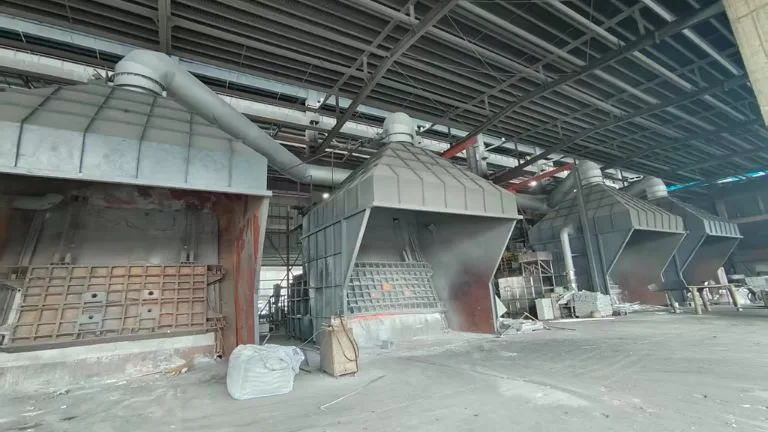
Industrial-Scale Aluminum Melting Furnaces
Industrial furnaces are designed for large-volume production, such as in foundries and automotive component manufacturing.
Reverberatory Furnace
Operating Principle: Uses gas or oil-fired flames reflected from the furnace roof to indirectly heat aluminum.
Capacity: Typically 1–50 tons per batch.
Advantages: Well-suited for continuous high-volume production; relatively energy-efficient.
Limitations: High oxidation losses; often requires flux or inert gas coverage.Induction Furnace
Operating Principle: Employs electromagnetic induction to heat aluminum directly, without combustion or flame.
Types:- Power frequency (50/60 Hz): For large batch melting (5–20 tons).
- Medium-frequency (150–1,000 Hz): Allows faster melting and is preferred for high-precision alloys, such as those used in aerospace.
Advantages: Precise temperature control and minimal oxidation; produces high-purity aluminum.
Limitations: Higher initial equipment costs and significant electricity consumption.
Tower Melter
Operating Principle: Aluminum is fed in from the top, melts gradually, and drains into a crucible at the bottom.
Advantages: Enables continuous production and achieves high thermal efficiency.
Typical Applications: Suitable for extrusion plants and recycled aluminum processing facilities.
Medium- and Small-Scale Aluminum Melting Equipment
These are used for small-batch productions, laboratories, or artisanal and DIY applications.
Gas/Oil Crucible Furnace
Fuel: Operates on propane, natural gas, or diesel.
Capacity: Usually 1–50 kg per melt.
Advantages: Portable and convenient for outdoor or temporary use.
Limitations: Greater temperature fluctuation and requires manual control.
Applications: Small castings, sculptural works, and artistic applications.Electric Crucible Furnace
Heating Method: Utilizes electric resistance heating coils or silicon carbide rods to heat a graphite or ceramic crucible.
Temperature Range: Adjustable, usually up to 700–1,200°C.
Advantages: Stable temperatures and simple operation; ideal for laboratory use.
Limitations: Slower melting rates compared to fuel-fired furnaces.
Applications: Research, jewelry casting, and small aluminum repairs.High-Frequency Induction Furnace (Small-Scale)
Capacity: Ranges from 0.5 to 5 kg.
Advantages: Very rapid melting with minimal oxidation; melt times of only a few minutes.
Limitations: Higher equipment cost; requires trained operators.
Applications: Precision alloy research and precious metal melting.

DIY and Household Aluminum Melting Tools
These are suitable for hobbyists and small-scale recycling.
Propane Torch & Graphite Crucible Set
Equipment: Handheld propane torch (e.g., Bernzomatic TS8000) used with a small graphite or steel crucible.
Capacity: Typically 0.5–2 kg per session.
Advantages: Low cost and accessible operation.
Limitations: Slower melting (about 20–30 minutes per batch) and less uniform heating.Charcoal/Coke Furnace
Fuel: Uses wood charcoal or coke, often with a manually operated blower for increased combustion.
Notes: Requires refractory materials, such as firebricks or ceramic fiber, for insulation and safety.
Applications: Traditional casting methods and outdoor aluminum melting.