
Aluminum Heat Sink vs Copper
Heat sinks are made from thermally conductive materials to transfer heat away from a heat source and release it into the air. Aluminum and copper are the most common materials used, thanks to their good heat conduction properties. This article compares aluminum and copper heat sinks to highlight their main differences.

Thermal Conductivity Comparison
| Material | Thermal Conductivity (W/m·K) | Density (g/cm³) |
|---|---|---|
| Aluminum | 205 | 2.7 |
| Copper | 385 | 8.9 |
Copper has a much higher thermal conductivity than aluminum, which means it transfers heat more efficiently. However, most heat sinks are made from aluminum. Next, we will compare these two materials from other practical aspects.
Manufacturability Comparison
Although copper offers superior thermal conductivity, practical heat sink applications must also consider factors such as ease of manufacturing.
Extrusion and Die-casting
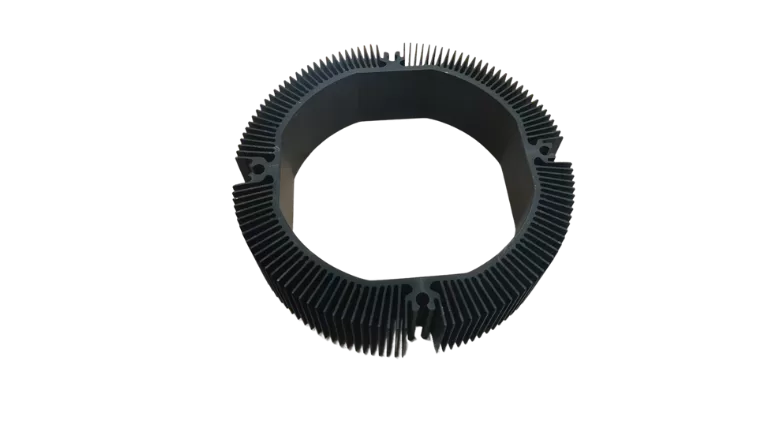
Aluminum can be mass-produced into fin heat sinks using extrusion and die-casting, both of which are cost-effective and efficient processes. Copper cannot be extruded or die-cast into complex shapes, limiting its manufacturing flexibility.
Skiving
Skiving is also a common method for making heat sinks. Aluminum is well-suited for skiving. In contrast, skiving copper results in significant tool wear and higher maintenance costs.

Machining and Soldering
Machining is easier with aluminum, as it cuts cleanly. Copper tends to stick to tools, complicating the process. For fin assembly by soldering, copper requires specialized solder and precise control, further increasing manufacturing difficulty and cost.

Surface Treatment
Copper heat sinks must undergo surface treatment to prevent oxidation, which would otherwise reduce their thermal conductivity. Common methods include nickel or silver plating, both of which increase manufacturing cost.
Cost Comparison
On the London Metal Exchange, the price of copper is typically about three times that of aluminum. Additionally, copper’s density is also roughly three times greater than aluminum’s. This means that, purely in terms of raw material procurement, the cost of producing a copper heat sink is approximately nine times higher than that of an equivalent aluminum heat sink. When higher processing and surface treatment expenses are also factored in, the total cost of a copper heat sink becomes significantly greater than that of an aluminum version.

Choosing Copper or Aluminum Heat Sinks
Based on the above analysis, aluminum heat sinks are preferred in most cases due to their lower cost and easier manufacturability. Copper heat sinks are only selected when aluminum cannot fulfill strict thermal requirements, such as in high-density electronic components or aerospace applications where both space and performance demands are critical. In general, if adequate cooling can be achieved with aluminum, there is no reason to use copper, as the extra complexity and expense cannot be justified.
